After the trial separation, here comes the messy divorce. And a vital question: Who gets custody of the narrative?
It has been less than a month since Prince Harry and Meghan Markle finalized their split from the British Royal Family, renouncing their patronages and honorary appointments as well as their income. The fallout between the couple and Buckingham Palace has been painful and public. “There is a lot that has been lost already,” Meghan told Oprah Winfrey in a two-hour interview broadcast last night on CBS—her relationship with her father, the baby she miscarried last year, even her surname. Halfway through, she compared herself to the Little Mermaid, who falls in love with a prince and loses her voice.
The royal narrative is that the Windsors receive millions from British taxpayers, and fulfill a public role. They can’t limit access to their lives to sympathetic listeners like Oprah. They must be accountable. Playing by those rules, you’d be mad to contest every false rumor printed about you, and declaring war on the press is counterproductive. Far better to keep your head down and let your work speak for itself. Can you see the difference in the two views? Members of the Royal Family accept a level of scrutiny and partisan attack usually directed at politicians. Meghan and Harry want to be treated like celebrities.
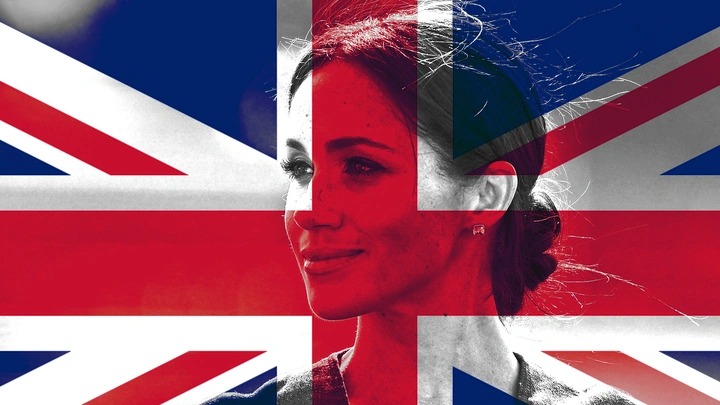
The portrait the couple painted of the Royal Family was an unflattering one: a dysfunctional, outdated institution, cowed by the tabloids, oblivious to racism. After the couple decided to “step back” from royal life, Harry told Oprah, his father—the heir to the throne, Prince Charles—stopped taking his calls and asked for his plans in writing instead. This was the first time in the interview that the vague references to “The Firm,” “the institution,” and “palace staff members” resolved into a specific villain. Charles had “let down” his son, and there was “a lot to work through,” Harry said.
Harry has spoken of his fears that history is repeating itself, and there are disturbing parallels between his mother and his wife. Diana’s infamous 1995 interview with Martin Bashir—referenced by Meghan within her first five minutes with Oprah—focused first on the “isolating experience” of joining the Firm, and then on Diana’s self-harm and depression, which were used to undermine her attempts to voice her unhappiness. “It gave everybody a wonderful new label—Diana’s ‘unstable’ and Diana’s ‘mentally unbalanced,’” the princess told Bashir. A quarter century later, Meghan told Oprah that at her lowest, she “didn’t want to be alive anymore.” For Harry, this must have been agonizing to witness; his rage at his family and loyalty to his wife demand to be read as a desire to replay the story of his childhood, only this time with a happy ending.Unlike Prince Andrew’s disastrous interview with the BBC’s Emily Maitlis in 2019, in which the prince repeatedly declined the opportunity to apologize to the sex-trafficking victims of his friend Jeffrey Epstein, the encounter with Oprah was designed to increase viewers’ sympathy toward its subjects. Oprah landed news lines like a champion angler lands trout, but she offered little challenge to the couple’s version of events. The two hours were blessedly free of influencer-speak, apart from a single reference to how the couple were “very aligned on all our cause-driven work.” There was minimal syrup (only one “the most important title I will ever have is Mom”). There was even humor, as when Oprah described a headline condemning Meghan for eating avocados, because the fruit contributes to “water shortages, illegal deforestation, and environmental devastation.” “That’s a really loaded piece of toast,” Meghan shot back. Oprah was so pleased with the quip that she repeated it, rolling it around her mouth in apparent wonder. This was not something you could imagine Maitlis doing with Andrew.
The choice of Oprah, America’s only Black female billionaire, underlined the couple’s case against the Royal Family, which they claim balked when faced with its first mixed-race member. This was the real dynamite. Harry has criticized the media’s aggression before, but his aim has now expanded to encompass the cowardice of his own relatives. He spoke of the Royal Family’s “invisible contract” with the British tabloids, hosting reporters for Christmas parties in the palace in exchange for favorable stories (or at least the absence of unfavorable stories). He also noted that while dozens of British politicians signed a letter condemning the “outdated, colonial undertones” of the coverage Meghan received, none of his relatives would endorse that message. He attributed this to fear that the tabloids would turn on them.
Ironically, this mentality of “never complain, never explain” will handicap the palace’s response to Meghan’s claims. There will be no retaliatory interview by Kate and William, much less a spicy tweetstorm from the Queen. Instead, before the interview, palace officials resorted to planting anonymous news stories about the duchess’s rudeness toward palace staff. The claims, denied by Meghan, were made in 2018 and then revived to preempt the Oprah interview. Whatever the merits of the accusations, that revival looked like a smear campaign; the palace has opened an investigation into Meghan’s actions, but seems more reluctant to investigate Prince Andrew’s friendship with Epstein.
Many Britons were initially sympathetic to Meghan: No one in their right mind would join the British Royal Family, so we felt she must really love Prince Harry. For a taste of the kind of interviews you are supposed to give as a duchess, try this from Vanity Fair, just before the engagement was announced, as she explained the joy of homemade bread: “It’s that perfect crunch and then the softness. They call it the ‘crumb,’ all of these little holes—oh!” No aristocratic title is worth a voluntary lobotomy.
As a divorced 30-something—unlike the teenage, virgin Diana—Meghan appeared to be going into the marriage with her eyes open. Yet Meghan’s monstering seems to have come as a shock to her—and to the many Americans who tuned into the Windsor soap opera only upon her arrival. “I went into it naively,” she told Oprah. “I didn’t do any research about what that would mean. I’ve never looked up my husband online.” (She said she also had to Google the British national anthem.) This stretches credulity. Not only did she not know the hellfire bath that awaited her, but Harry didn’t think to mention it? No one at the palace did either? For a moment, a hairline crack spread across her version of events, allowing the viewer to glimpse a murkier, more contested picture. In Harry and Meghan’s narrative, they are blameless. They made no strategic errors and acted with perfect reasonableness throughout. Hmm.
SOURCE: theatlantic